
 Switching IT Providers
Thinking about switching IT providers?
Most businesses do not start looking because everything is on fire. They start looking because support feels vague, reactive, or harder to trust than it should.
"Xentric is the best!!! You can trust them with your business. They are our ITs for the past 6 years and we couldn't have better ones. After changing IT guys every half a year we finally found a trusted company who cares about you like they do about themselves."Ana AnaniashviliBeverly Hills Luxury Interiors, LLC
Not sure whether it is time to move on?
This page is for businesses that already have IT support, but are questioning whether the relationship is still working the way it should.
If communication feels unclear, recurring issues keep coming back, projects drag, or you are not confident anyone is truly looking ahead, it may be time to take a more honest look at the relationship.
Changing providers should not feel reckless. It should feel informed.
It usually does not fail all at once
A lot of businesses do not reach this point because of one dramatic outage or one major disaster.
More often, things just start to feel a little off.
From the outside, everything may look fine. People are working. Systems are available. Nothing is obviously broken. But from your side, confidence starts to slip. You are not fully sure what is being handled, what is being missed, or whether anyone is really thinking ahead.
You may notice that conversations about security feel vague. Projects take longer than expected. Explanations feel rushed or overly technical. You know what you are paying each month, but not always what that is truly doing for the business.
That kind of uncertainty matters.
Good IT support is not just about fixing problems. It is about giving you confidence that someone competent is paying attention, raising issues early, and helping the business move forward with fewer surprises.
If support leaves you guessing, the problem is not just technical. It is relational.
What starts to feel off
When an IT relationship no longer fits, the signs are usually small at first. On their own, each one can be easy to excuse. Together, they start to form a pattern.
Support exists, but it is always reactive
Things get fixed after you raise them, but there is no real sense of forward planning, regular review, or someone watching the bigger picture.
The same issues keep coming back
Small problems are handled, but never seem fully resolved. Temporary fixes start to feel permanent.
Communication makes things harder, not clearer
Answers feel rushed, overly technical, or incomplete. You leave conversations with more uncertainty than you had before.
Security is mentioned, but never made clear
You hear that things are covered, but you are not sure what that means in practical terms or how your real risks are being managed.
Projects drag and priorities get blurry
Improvements take too long, ownership feels unclear, and what started as a straightforward change ends up feeling messy or unfinished.
You are not sure anyone is really looking ahead
Instead of being guided proactively, the business feels like it is always one issue away from another decision that should have been addressed earlier.
Sometimes these things improve after a direct conversation. Sometimes they do not. If the same frustrations keep resurfacing, it may simply mean the support model is no longer aligned with where your business is now.
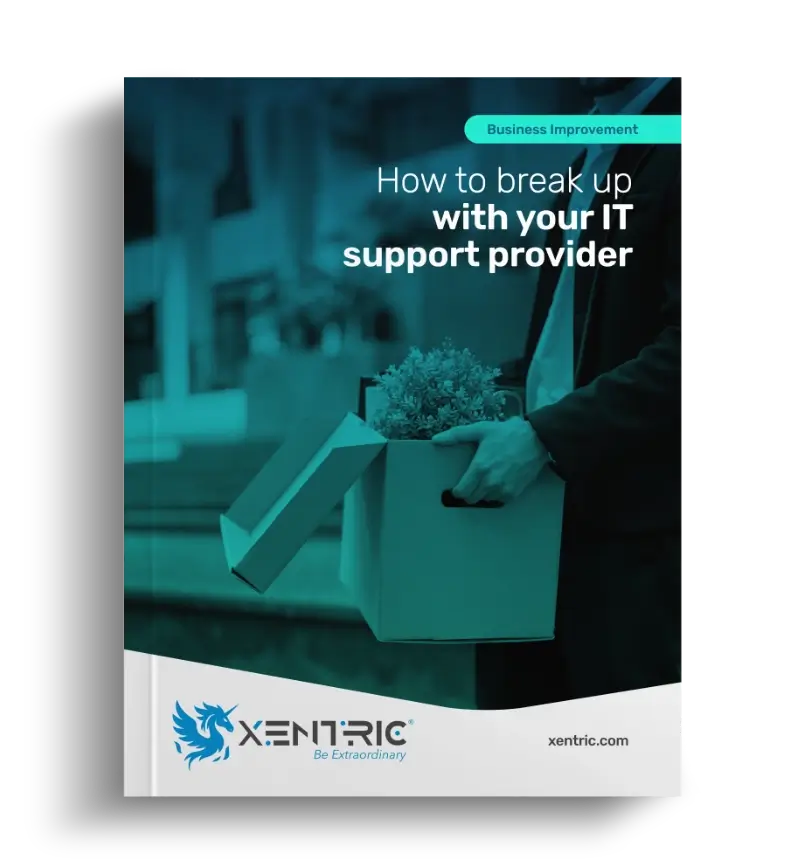
Need a clearer way to think it through?
We put together a guide called How to Break Up With Your IT Support Provider for businesses that are trying to sort out whether the relationship still fits.
It is designed to help you step back, look at the situation more plainly, and think through the decision without overreacting or second-guessing yourself.
How do you know the next provider will not be just as bad?
That is the right question.
Most IT providers sound good in the sales process. They all talk about responsiveness, expertise, security, and support. The harder question is whether the relationship will actually feel better six months or three years later.
A better way to evaluate an IT provider is to look at how they think, how they communicate, and how they handle responsibility before you ever sign anything.
What to pay attention to:
Clear communication
Do they explain things in a way that helps you make decisions, or do they rely on jargon and vague reassurance?
Business understanding
Are they curious about how your business actually works, or are they treating you like another generic environment?
Prevention, not just response
Do they talk about reducing recurring issues, planning ahead, and raising risk early, or only about reacting quickly after something breaks?
Ownership and expectations
Are responsibilities, boundaries, and next steps clear up front, or left fuzzy until later?
Structure
Do they have a rhythm for reviews, planning, prioritization, and decision-making, or is the relationship likely to drift into autopilot again?
How you feel after the conversation
Do you feel clearer about your business, your risks, and your options? Or do you feel impressed in the moment but still unsure what anything will actually look like later?
A better provider should not just sound competent. They should make you feel more informed, more grounded, and more confident in the decisions ahead. That is one of the clearest signals that the relationship itself may be different.
Changing providers should feel organized, not chaotic
One of the biggest reasons businesses stay in a poor-fit IT relationship is fear of disruption. That fear is understandable. Technology touches everything. If the handoff is sloppy, the business feels it. But a well-managed transition should not feel reckless or chaotic. It should feel structured.

We Get Visibility
We work to understand your current environment, support structure, known issues, vendors, tools, and access requirements so the business is not walking into a blind handoff.
We Identify Immediate Risk
Before anything else, we want to know what could create disruption, what needs to be stabilized, and what cannot be left vague during the transition.
We Organize the Handoff
Documentation, access, support responsibilities, onboarding details, and operational ownership should all be made clear so daily support can continue without unnecessary confusion.
We Improve Deliberately
Not everything needs to change at once. The first goal is stability and clarity. The next goal is better structure, better communication, and better long-term support.
Changing providers should not create new uncertainty. It should reduce the uncertainty you are already living with.
What better IT support feels like
When the relationship is right, IT support does not feel confusing or tense in the background. It feels steady.
- You are not guessing whether things are under control.
- You understand what matters without needing to speak IT.
- Risks are raised early, not after the fact.
- Recurring problems get dealt with properly.
- Your team can work without technology becoming a constant irritation.
- You feel informed enough to make decisions, without needing to know every technical detail behind them.
- Conversations feel calm, useful, and connected to the business.
When the relationship is right, IT support does not feel confusing or tense in the background. It feels steady.
You do not have to figure it out all at once
A lot of business owners hesitate here for understandable reasons.
Maybe the current provider is not terrible. Maybe the relationship used to work better. Maybe changing feels like it will take more time and energy than you want to spend.
That is exactly why this decision should not be made from pressure.
Sometimes the next step is a straightforward conversation with your current provider. Sometimes that helps. Sometimes it only confirms that the relationship is no longer giving you the clarity or confidence the business needs.
Either way, the right starting point is honesty.
If things feel vague, reactive, or harder to trust than they should, that is worth paying attention to. Not because you are looking for reasons to leave, but because your business depends too much on technology to stay in a relationship that no longer feels aligned.
A simple way to sense-check the relationship
You do not need to overcomplicate this. Start with a few honest questions:
- Do I clearly understand what my IT provider is responsible for?
- If something serious happened, would I know who is doing what?
- When important decisions come up, do I feel informed rather than confused?
- Do conversations about IT and security make me feel calmer?
- Do recurring issues actually get resolved?
- Is there evidence of planning and looking ahead?
- Do I feel comfortable asking questions?
- Do I trust that they act in the best interests of the business?
- Do I feel confident our support can grow with us?
- If I am honest, does this still feel like support, or just habit?
Start with a conversation, not a commitment
If you are trying to figure out whether your current IT relationship still fits, we are happy to talk it through. No pressure. No need to have everything figured out first. Just a clearer conversation about where things stand, what concerns are valid, and what a better path forward could look like.
"Super personalized experience. Communication was quick, easy, and to the point. As soon as I told Xentric my needs, they sent me the best options, and made sure that I was set up and ready to go ASAP."