
 Co-Managed IT
Reinforce your internal IT team without giving up control
Co-managed IT gives your internal team added capacity and specialist support while strategy and decision-making stay in-house.
“I manage IT for a multi-location health care provider, so it's hard for me to oversee each location in real-time. Xentric Solutions has been a savior for me and my company. They provide support whenever we need and are always looking out for our best interests. Thank you Xentric Solutions!”Arthur OganesyanAll For Health, Health For All, Inc.
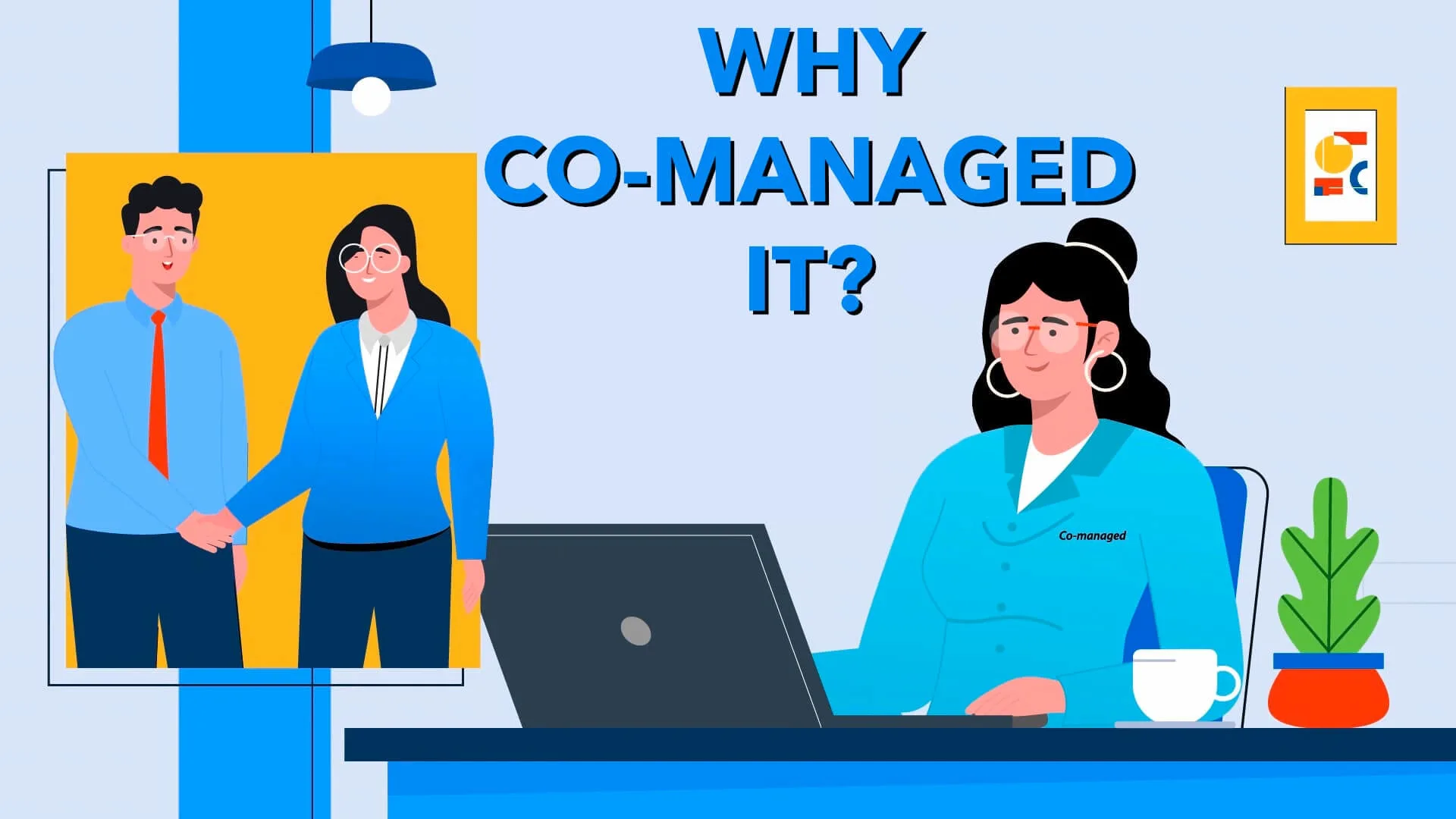
Xentric Solutions provides co-managed IT support for organizations that already have internal IT leadership but need more delivery capacity, specialist expertise, or structured operational support.
We work alongside your internal team with clearly defined responsibilities, agreed escalation paths, and a controlled working model that expands support without reducing control.
Internal control stays in place
Your internal IT team keeps strategic ownership, standards, and decision-making authority.
Support is clearly defined
Responsibilities, escalation paths, and working boundaries are agreed in advance.
Reinforcement is deliberate
Support is added where pressure exists so your team gains capacity without losing structure.
is this you
When co-managed IT makes sense
In many organizations, IT is still functioning day to day, but pressure is building quietly in the background. Reactive work keeps absorbing time that should go toward planning, security expectations continue rising, and projects move slower than the business needs.
- Operational workload is limiting strategic progress
- Security or compliance expectations are increasing
- Key knowledge is concentrated in a few people
- Projects are hard to move forward at pace
- Growth is adding technical complexity
None of this means your team is failing.
It usually means the current operating model needs reinforcement.
what it is
What Co-Managed IT Support is
Co-managed IT is a structured partnership model. Your internal IT team keeps strategic ownership, decision-making authority, and accountability. We provide agreed operational capacity and specialist expertise in the areas where reinforcement is needed.
It is not outsourcing with softer language. It is a deliberate way to strengthen delivery without diluting internal control.
how it works
Your team keeps control. We add capacity where it's needed.
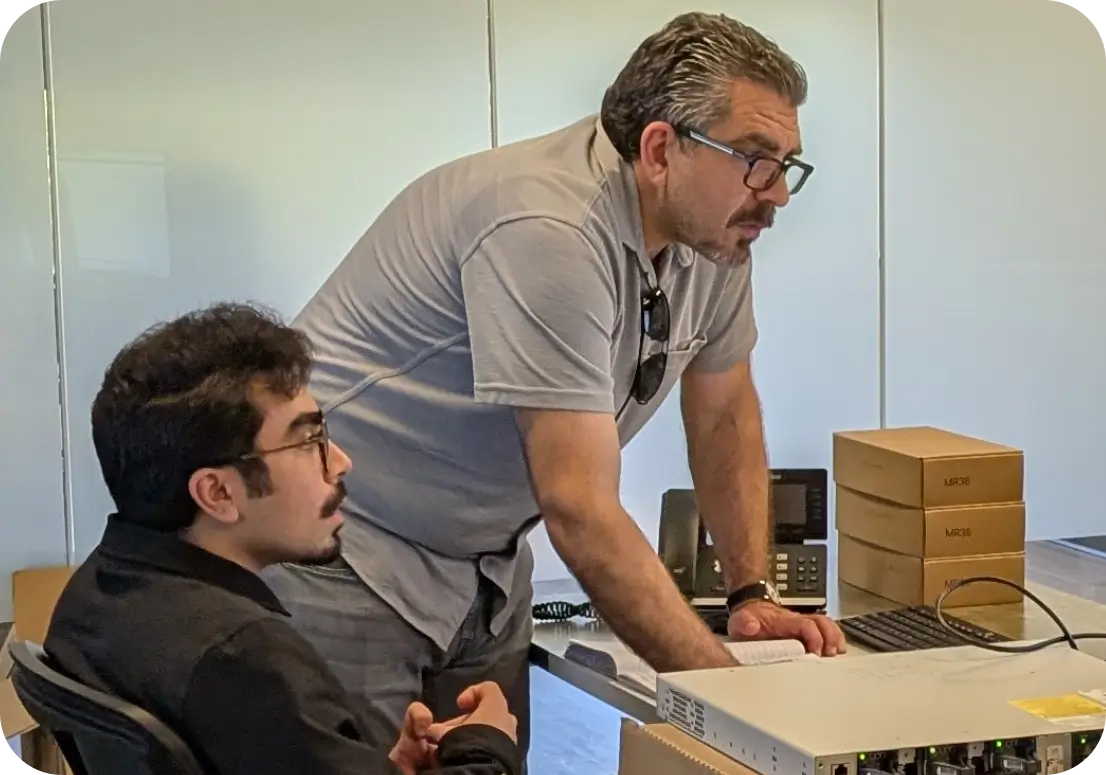
What stays with your internal IT team
A properly structured co-managed model does not remove authority from your internal IT leadership. Your team continues to lead the function. Our role is to support that leadership, not replace it.
Your team retains:
- Technology strategy
- Roadmap ownership
- Standards and decision-making
- Vendor leadership
- Executive communication
- Budget and governance accountability
Internal leadership remains internal. Our partnership is there to increase delivery strength, not redistribute control.
Where we provide structured support
Our involvement is clearly defined in advance. The goal is to reinforce the areas where pressure exists, add specialist depth where needed, and help protect momentum without creating overlap or confusion.
- Operational workload support
- Escalated technical expertise
- Structured security monitoring and reporting
- Project delivery capacity
- Surge support during periods of high demand
Responsibilities are mapped before operational work begins, so ownership, escalation, and decision-making are clear.

clear boundaries
Clear boundaries make the partnership work
One of the most common concerns around co-managed IT is loss of control. That concern is reasonable. The way to avoid confusion is not vague reassurance. It is clear definition of who owns what and how collaboration works.
Who owns which responsibilities
How escalation pathways work
Where accountability sits during incidents
How changes are approved and communicated
When boundaries are documented early, collaboration feels structured instead of intrusive.
An in-house/outsource partnership is not only common, but growing in popularity.
This combination will require the company leadership, in-house IT, and outsourced IT to set clear expectations of roles.
Here are some examples of outlining outsourced roles:
- Server Management: Changes made to the server, security audits, updates, and migrations are done by the MSP.
- Backup and Disaster Recovery: The MSP manages the data backups onsite and offsite. They monitor, test restore, and all the other plethora of items associated with data redundancy.
- Level 1, 2, or 3 Help Desk: Outsource lower level or higher-level help desk tickets to the MSP.
free worksheet
Define roles before support begins
Co-managed IT works better when both sides are clear on who handles what. This worksheet gives you a practical starting point for mapping responsibilities, escalation paths, and support boundaries.
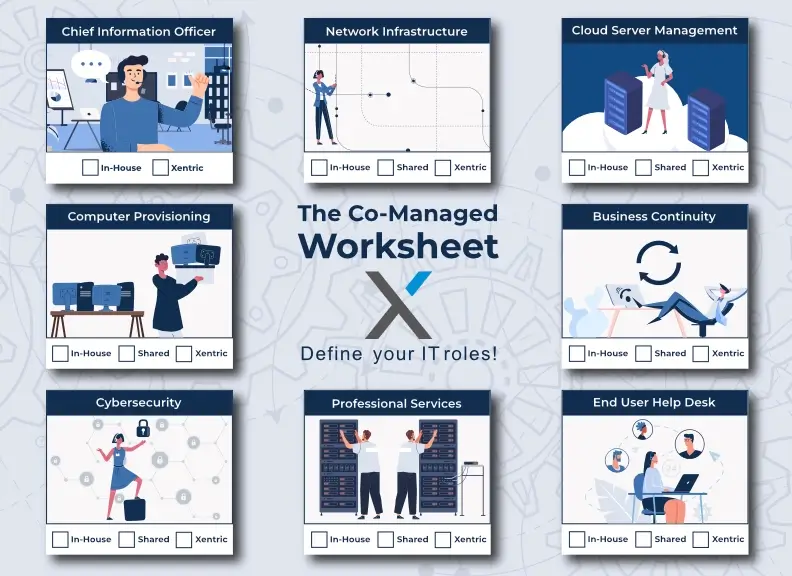
Click to download the worksheet.
Download the worksheet getting started
Introduced in phases, not dropped in all at once
Co-managed IT should never feel disruptive. We begin with alignment, governance clarification, and role definition. Once responsibilities are agreed, support is introduced in the specific areas where pressure exists. After stability is established, we can expand reinforcement in ways that protect roadmap progress and reduce long-term strain.
Align Responsibilities
Define who owns what, how escalation works, and where outside support fits.
Stabilize High-Pressure Areas
Add reinforcement where operational load, project pressure, or specialist gaps are slowing progress.
Reinforce Long-Term Capacity
Expand support in a controlled way that reduces strain and protects roadmap momentum over time.
The goal is not rapid transformation. It is sustainable reinforcement.

the bigger picture
Why co-managed is often the safer structural decision
For internal IT leadership, the right co-managed model preserves authority while reducing delivery strain. For executives, it creates a more structured, resilient, and sustainable operating model without forcing a full outsourcing decision.
When responsibilities are documented, governance is defined, and support is introduced in a controlled way, the decision feels less like a disruption and more like responsible reinforcement.
For IT Leadership
- Preserved Authority
- Added Delivery Capacity
- Reduced Single-Point Dependency
For Executives
- Stronger Resilience
- Better Continuity
- More Predictable Operating Structure
It brings better alignment to both sides
What Co-Managed IT is NOT
- A takeover of your IT function
- Outsourcing disguised as partnership
- An excuse to replace internal leadership
- A way to impose tooling without agreement
- A shortcut around governance or accountability
Co-managed IT works best when it is positioned and delivered as a structured partnership that increases resilience while preserving control.
“When a weekend flood emergency knocked our network offline, Xentric Solutions brought in replacement enterprise equipment, configured them and had us back up and running by 4 AM Monday morning.”

Is Co-Managed IT the right fit?
A strong fit if:
- Your internal IT team is capable but constrained
- Operational pressure is hurting strategic progress
- Risk exposure is increasing
- Complexity is outpacing capacity
- You need specialist expertise, but not always full time
Probably not necessary if:
- Capacity is stable
- Security posture is already mature and sustainable
- Complexity is limited
- The current model has enough strategic and operational headroom
This is a structural decision, not an emotional one.
start with a structured conversation
Book a co-managed discovery meeting
The right first step is a discussion about capacity, risk, governance, and long-term sustainability. If you want to explore whether co-managed IT could strengthen your internal team without reducing control, let's talk. No pressure, no takeover pitch, just a structured conversation about fit.

not quite ready yet?
No problem!
Take your next step with this worksheet of 10 Questions To Ask a Potential Co-Managed IT Firm.
Download it now faq
Frequently Asked Questions about co-managed IT
If you are evaluating co-managed IT, a few practical questions usually come up around scope, control, and how the relationship works. Here are some of the most common ones.

Reinforce your internal team without losing control of strategy or standards.
Book a co-managed discovery meeting